90-Second Read: Hantavirus live updates: Spanish authorities preparing for the arrival of M/V Hondius
Editorial voice
Daniel Reyes
Published
Published May 9, 2026
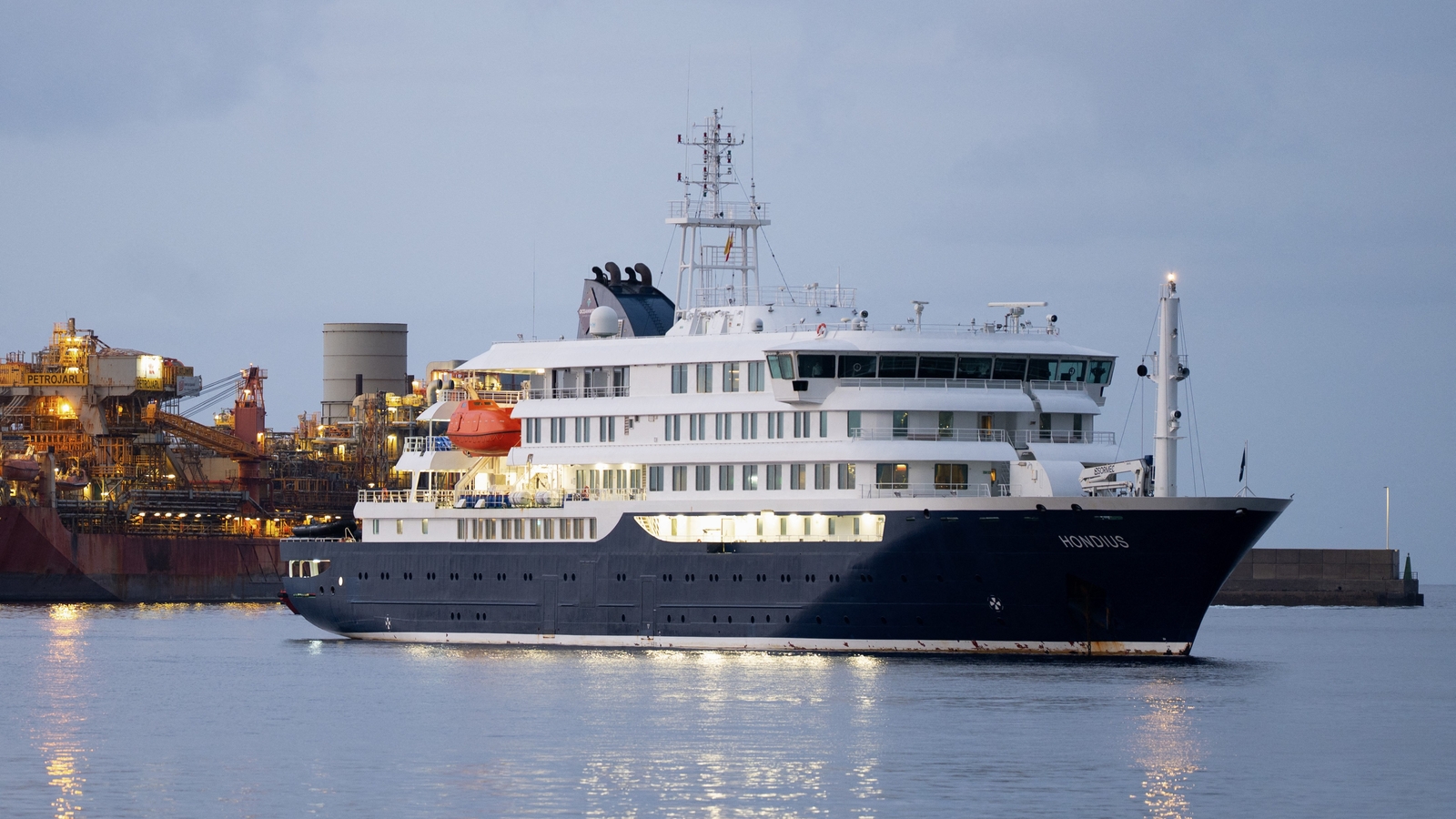
Global health authorities are working to contain an outbreak of Hantavirus aboard the MV Hondius cruise ship. Each passenger is set to be evaluated upon arrival in the U.S., and they may opt to go home and watch for any potential symptoms for 42 days while staying in touch with their state or local health departments, the officials said. Spanish authorities are preparing the port area in Tenerife to receive passengers with repatriation flights scheduled for the U.S., U.K., France, Germany, Belgium, Ireland and the Netherlands, according to Reuters. The total number of confirmed cases associated with the outbreak is increasing, health officials said. More than 100 passengers remain on the ship, and the World Health Organization is monitoring their health.
The WHO director appeared at a short press briefing alongside Spanish Health Minister Monica Garcia and other Spanish authorities. Spanish passengers are set to be the first to disembark, according to the Spanish health minister, who said the passengers will be flown to Madrid to quarantine at the city's Gomez-Ulla military hospital. A CDC official said Saturday the federal government doesn't plan to have the repatriated American cruise ship passengers quarantine upon arrival in Nebraska. To date, three people who were aboard the ship are known to have died of the virus. The WHO director said the risk to the local population is low because of the nature of the disease and because the Spanish government has made preparations.
Officials said that the "overall public health risk remains low" but that there may be some person-to-person spread. Here's what you need to know about Hantavirus including what it is, how it spreads, how it's treated and if there are any prevention methods: Hantaviruses are a family of viruses that can cause serious illnesses and death, according to the CDC. Hantaviruses may also spread from person to person, but that also is rare and only suspected for one subtype from South America, according to the WHO. As of Saturday none of the 17 Americans aboard the cruise have tested positive for the Hantavirus, according to CDC officials. The minister said no one on board the ship has any symptoms.
Only when the aircraft bound for a specific country is on the runway, ready to fly to that country, will nationals of that country be disembarked and taken there, using transport provided by the Spanish army. Fourteen Spanish passengers will be the first to be transferred to the Port of Granadilla. We are not quarantining anybody," a CDC official told reporters on a call Saturday. When asked if passengers will be tested, a CDC official said, "it is not recommended to test people that do not have symptoms." Federal officials walked through their plan for the passengers. Officials may recommend that passengers doing home-based monitoring limit their activities outside the house to those that don't involve extensive interactions with other people.
Source reference
Original reporting
Based on reporting from ABC7 Los Angeles. Read the original source for full details.
Source published May 9, 6:02 PM EDT. Hantavirus Now reviewed reporting from ABC7 Los Angeles and summarized the key points below.
Read original article