90-Second Read: Infected, at sea: how the deadly Hantavirus turned a dream cruise into tragedy
Editorial voice
Daniel Reyes
Published
Published May 9, 2026
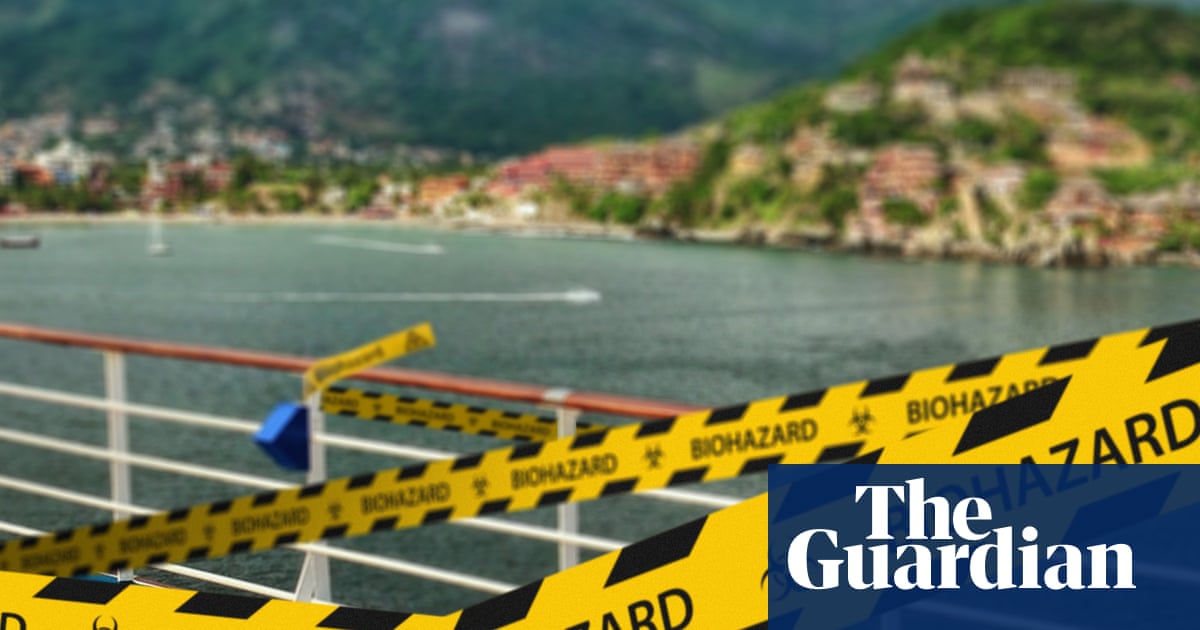
And whereas Covid-19 was easily spread from person to person, the World Health Organization (WHO) and other health authorities have stressed that human-to-human transmission of Hantavirus is very rare, and so the risk to public health is low. But while cases of norovirus, flu and Covid are well known on cruise ships, this is the first recorded onboard outbreak of Hantavirus, a disease that kills up to half of those it infects, according to the WHO. Meanwhile, health authorities around the world are attempting to trace at least 29 passengers of 12 nationalities who disembarked in St Helena, while a third British national was reported as being diagnosed with suspected Hantavirus in Tristan da Cunha on Friday. Three passengers were dead after an outbreak of Hantavirus – a disease with.
Though cases are rare among humans, Hantaviruses carried by rodents have long been present in parts of Africa, Asia and South America. Public health authorities and the cruise industry will also be watching anxiously to see if this is a one-off outbreak and whether there will be wider repercussions. Then, last Saturday, an 80-year-old German woman died onboard and South African specialists identified the pathogen infecting the British man as Hantavirus. Eighty-eight passengers and 61 crew of 23 nationalities had boarded the small polar-class vessel for its 35-day "Atlantic expedition" from the Argentinian province to Cape Verde, via some of the most remote islands on the planet. While cruises were not uniquely dangerous, he said: "They do combine several conditions that make transmission easier: close contact, shared dining, enclosed spaces.
Outbreaks of disease at sea are common, and Vikram Niranjan, an assistant professor in public health at the University of Limerick, considers this unsurprising. This is very unusual and I think it reflects how extraordinary this particular situation is," said Raphael Giacardi, the head of content at the publications World of Cruising and Cruise Trade News. For a lot of us, the name 'Hantavirus' is something we discovered only a few days ago, and I think that's what you're seeing with the port authorities: the countries are operating in unknown territories and they have to make decisions on the spot. But normally, you would see people evacuated and taken care of as soon as physically possible." Cruise operators had long-established protocols for managing outbreaks that had inevitably tightened since Covid.
A ship is a defined setting, so once an outbreak is recognised, public health teams can focus on a known population and a known environment. Cruise lines are all too aware that being lax on sanitation or hygiene could lead to an issue that would bring negative media coverage. He developed respiratory symptoms on 6 April and died five days later. That makes case-finding, contact-tracing, isolation, cleaning and environmental review more feasible than in an uncontrolled community setting. He had it quite mild then it got a bit more serious and now he's stable again." A female KLM air steward had also been hospitalised after showing symptoms, the Dutch health ministry said.
Source reference
Original reporting
Based on reporting from The Guardian. Read the original source for full details.
Source published May 9, 1:00 AM EDT. Hantavirus Now reviewed reporting from The Guardian and summarized the key points below.
Read original article